

The Beautiful People
The most beautiful movies, the best writers' workshops, Paris's most intriguing exhibit, and all the deets on the Condé Nast book...
Condé Confidential


Ever since The New York Times media correspondent Michael Grynbaum’s opus on Condé Nast, Empire of the Elite, hit shelves last summer, the publishing world has been chattering about stories of overspending, brutal firings, and Newhouse family lore. As former Vogue editors, we knew many of these tales—the Vanity Fair publisher who famously FedExed his Porsche to Aspen, the stacks of Big Apple town car vouchers hidden in desk drawers. But there were surprises, too. Namely, that S.I. Newhouse and Roy Cohn were childhood friends and spoke on the phone nearly every day (hence the gangster shakedowns for those who dared resign). Or that Big Apple was owned by the daughter of a Bonanno family consigliere. We have more questions for Grynbaum:
1) What was the inspo for the book?
I broke the news in 2017 that Graydon Carter would step down from Vanity Fair. I had such fun writing that story – which turned into something of an elegy for the era of celebrity editors – and was surprised later on when I couldn’t find a book-length history of Condé Nast that captured its magazines’ sprawling influence on culture and society. The most recent works were from the 1990s, and in need of an update. I view Condé, in its heyday, as akin to the great Old Hollywood studios of the 1930s: a culture factory of highly skilled artisans who manufactured and marketed a vision of American splendor to the country. This was an institution that deserved a rigorous, enduring (and delicious) chronicle of its exploits.
2) Who was most difficult/elusive person to talk to?
Condé’s current management did not cooperate with the book, so I was never able to sit down with Anna Wintour. That didn’t stop me from interviewing hundreds of other current and former Condé employees, from editors in chief to former interns, so that I could create a kaleidoscopic portrait of the company across many decades. One of my favorite interviews was Polly Mellen, who Zoomed with me from her home in Connecticut a year or two before she died; her memory was razor-sharp and she brought to life some of her most famous photo shoots with Richard Avedon, Sheila Metzner, and others. The farthest I traveled for an interview was Rome, where I met with Frick Vreeland, Diana’s nonagenarian son. He recalled Diana trawling the halls of Vogue in the 1960s, her squadron of assistants in lockstep behind her, feverishly taking down her observations about style and clothes. What a time that was.
3) Which magazines, if any, do you think will survive?
Vogue, Vanity Fair, and The New Yorker strike me as the Condé magazines that are considered the Newhouses’ heirlooms, and I believe the family would be loath to give these up, even if interested buyers come along. (The rumors that Lauren Sanchez Bezos might purchase Vogue were just that — rumors.) Architectural Digest, Wired, and GQ are doing terrific work with solid readership, and they feel relevant to the zeitgeist. I think the smaller titles, especially the ones that no longer produce in print, are in most danger: Glamour, Allure, etc. Teen Vogue has already been folded into the mothership. SI Newhouse’s brother Donald is still alive; I don’t expect the family to make any major moves at Condé with the core titles until after his death. (And I am told he is in great health!)
4) What was the most comical spending story you heard about the heyday of magazines and Condé Nast?
When Katrina Heron became the editor in chief of Wired in the late 1990s, she flew from San Francisco to New York to meet with her new bosses. For her stay, she booked a modest room at the Royalton hotel. Steve Florio, the blustery president of Condé at the time, scolded her: she needed to change to a more expensive hotel that was commensurate with her position. She ended up at the St. Regis on Fifth Avenue, for several times the price. “Good,” Florio said, when he heard about her new digs. “When people have breakfast with you, they want you to be staying at the St. Regis.”
5) Did you ever interview for or land a job at one of the CNP titles? Or even want to?
I never worked at Condé Nast, though I have many friends who did or do. I’ve always been intrigued by the glamour and history of the company. I spent three years thinking about Condé nearly every day for the book, so its future is of great interest to me. And while the company has certainly struggled of late, I do think Condé has a good story to tell. At a moment when major media companies like ABC and CBS have settled lawsuits from the president, the Newhouse family is backing independent journalism. I’m curious to see if the company allows its new generation of leaders free rein to innovate, experiment, and expand on its magazines’ legacy; that’s what kept Condé successful in the past, and it could do so again in the future.
Writers In Residence


As a professional writer and editor, the idea of participating in a writing workshop has always been foreign to me until I spent a week in Positano, Italy, at Sirenland where I studied with the brilliant novelist and teacher Hannah Tinti. I was struggling with a memoir and a friend suggested I go because Sirenland is run by memoirist extraordinaire Dani Shapiro and her husband, Michael Maren. They invite two guest teachers every year to join them at Le Sirenuse, run by the Sarsale family. Participants have the hotel to themselves (it’s one week before the season opens) and are divided into four groups of 10 students that meet every morning and workshop two manuscripts a day. Each student also gets one half-hour session with their teacher at the end of the week. There are lectures, group dinners, and a hilarious gala evening where students read their work aloud. Applications can be found on Sirenland.
My friends say “What, another writing workshop?” when I tell them I’m traveling to Positano or Marrakech, as I did last November to study with the Silk Roads Slippers crew at Jnane Tamsna, a beautiful family-run riad just outside the city. This weeklong workshop is run by Alexandra Pringle, formerly the editor of Bloomsbury books (and author of her own upcoming memoir!); Faiza Khan, also a Bloomsbury alum and author; and historian, broadcaster, and screenwriter Alex Von Tunzelmann. Structured slightly differently, Silk Roads hosts one group of 12 students with guest authors teaching. The brilliant Colum McCann was the guest author the week I was there. “Be Provocative! Don’t be afraid to roll a grenade into some of the stupidities around us,” he told us. (His novel, Let The Great World Spin is one of my all-time favorites). During morning workshops, students are given writing prompts and then read their work aloud to the group. The editors and guest teacher share commentary which is both terrifying and enlightening. My writing seemed to improve overnight. For more information on their four weeklong workshops go to Silk Road Slippers.
Websites like One Story and Off Assignment also offer excellent workshops — both live on zoom and asynchronous — with authors like Patrick Ryan, Hannah Tinti, and Alexander Chee. While participants don’t get direct feedback on manuscripts, they can share work on zoom chats and teachers will respond to questions. KB
Scenic Wonders
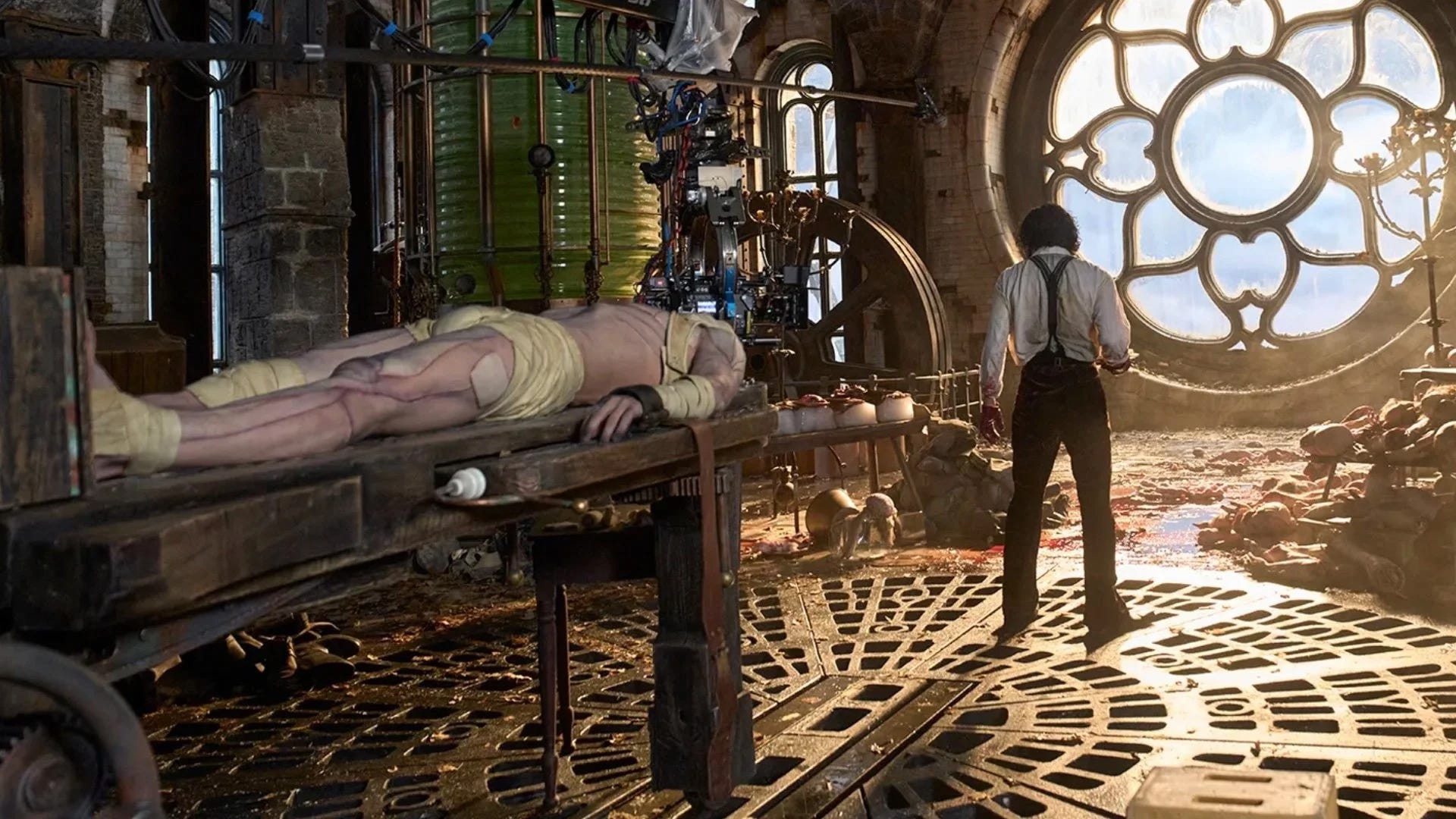
With the Academy Award nominations out on Thursday, this seems a good moment to look back. We want to salute not the acting, writing, or directing that made so many movies so memorable this year but to celebrate the sheer beauty of some of them. These are the seven films whose production design, cinematography, and costumes we found to be the most visually dazzling of 2025. There may have been better movies this year, but none that more effectively enveloped you in their vision, created worlds you want to linger in, or more evocatively evoked a place and time. MB


Frankenstein Was there a more visually layered and lush movie this year? Guillermo del Toro creates a world both terrifying and entrancing, sumptuous and horrific. The way Jacob Elordi moved as the monster! Those vivid veils!
Nouvelle Vague Richard Linklater’s witty love letter to the French New Wave is also an ode to the Paris we all wish we had known, captured in velvety black and white by cinematographer David Chambille.
Train Dreams The Pacific Northwest, its soaring trees and drenching rains, are as much a star of this quietly heartbreaking film as the craggy, evocative face of Joel Edgerton.
Marty Supreme In Josh Safdie’s ping-pong picaresque, every frame seems bathed in the air of desperation and ambition that drives its hero.
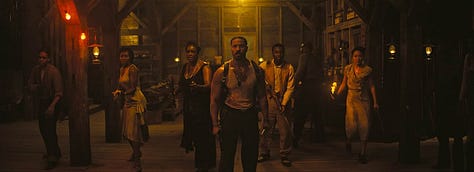

Scenes from Sinners, F1, and Sentimental Value Sinners Ryan Coogler crafted a world so steamy and seductive, who wouldn’t want to be part of it—vampires be damned.
F1 All that gleaming chrome and sensuously sculpted sheet metal, the hurtling speed and squealing tires. Plus Brad Pitt in that skin-tight white shirt.
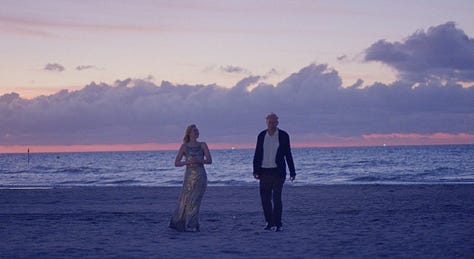
Sentimental Value In Joachim Trier’s film about a movie director estranged from his two daughters, a faded gingerbread Victorian in Oslo is not merely the setting, but a powerful metaphor, and its renovation is as heartbreaking as anything that occurs among the characters.


Utopia in Paris
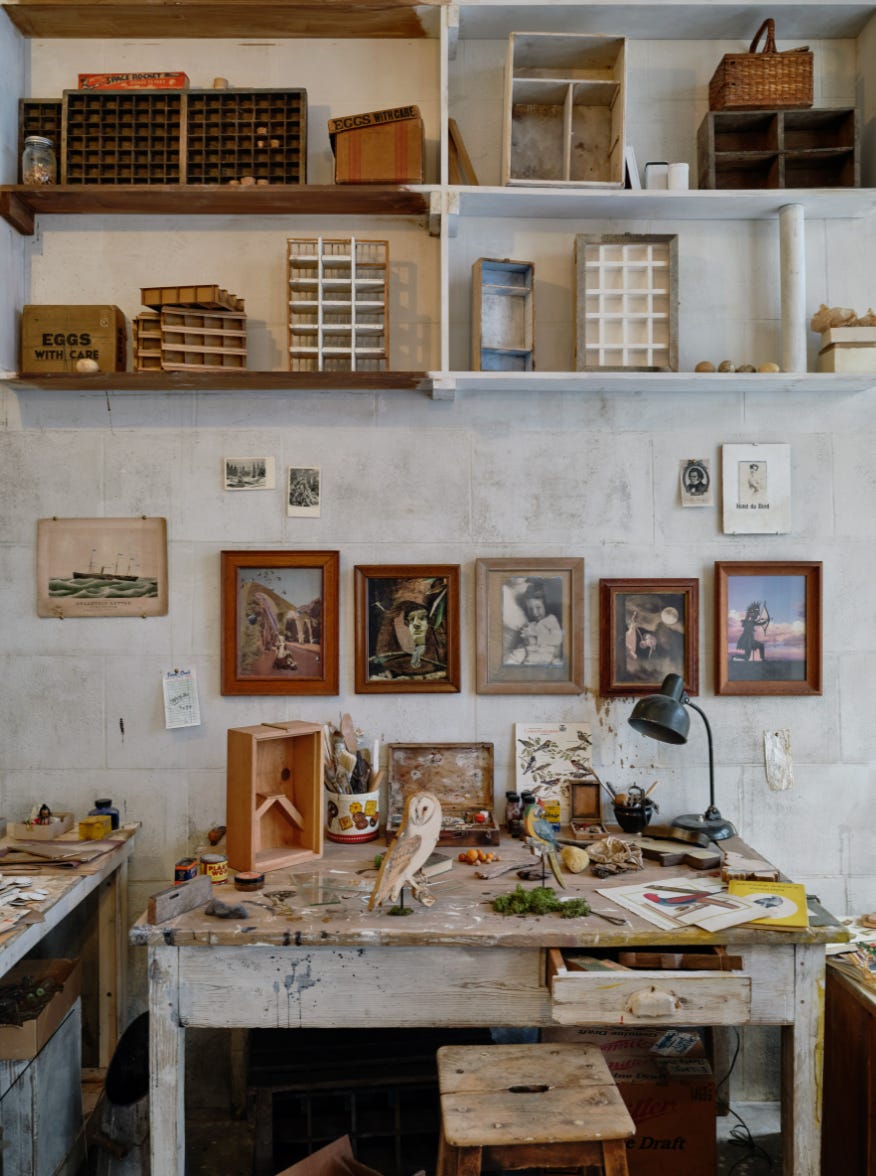
Now that the Louvre is charging foreigners $38 to enter, maybe window exhibits will become the thing. That might be the thinking behind an intriguing new exhibit, “The House on Utopia Parkway,” which recreates the home studio of American artist Joseph Cornell inside a shop window on Paris’s rue Castiglione. Gagosian Paris enlisted filmmaker Wes Anderson to reconstruct the artist’s legendary Queens studio at full scale with over three hundred objects. Pedestrians can peer in at number 9 and see Cornell’s collection, including his shadow boxes like Pharmacy (1943) which was once owned by Marcel Duchamp. Catch it before it closes on March 14th. KB
Faces in New York


It may no longer be politically correct to showcase the art of women and people of color, but fortunately, New York City museums didn’t seem to get the memo. The Museum of Modern Art is coming off a stellar year, with the revelatory Jack Whitten retrospective last summer, and stunning installations of the works of Ruth Asawa (on view through February 7) and Wifredo Lam (through April 11). At the Metropolitan Museum is the first museum show of Boston-based Black artist John Wilson, who died a decade ago. A highlight of this strong survey of his humane sculptures, prints, and paintings are his amazing, velvety charcoal portrait drawings (through February 8). Also at the Met is the first US show of Finnish painter Helene Schjerbeck. Treasured in her homeland, the artist is virtually unknown elsewhere (and certainly to me). Overcoming poor health and living largely in seclusion, she forged a low-key and highly personal form of modernism, especially in her many haunting self-portraits (through April 5). And through April 26, the Guggenheim is presenting an elegant show of one of only two women in the Blue Rider Group, Gabriele Münter. Munter merged the incisive lines of German Expressionism with the vivid color palette of the Fauves to create a highly distinctive vision. MB
This is a juicy one - thank you KB and MB! Joseph Cornell 🙏🏽!