

March Madness
Fur is flying, books are fashion, a Brazilian designer hits NYC, and a fashion photographer is saluted at the Met...
Real Fur, For Real?
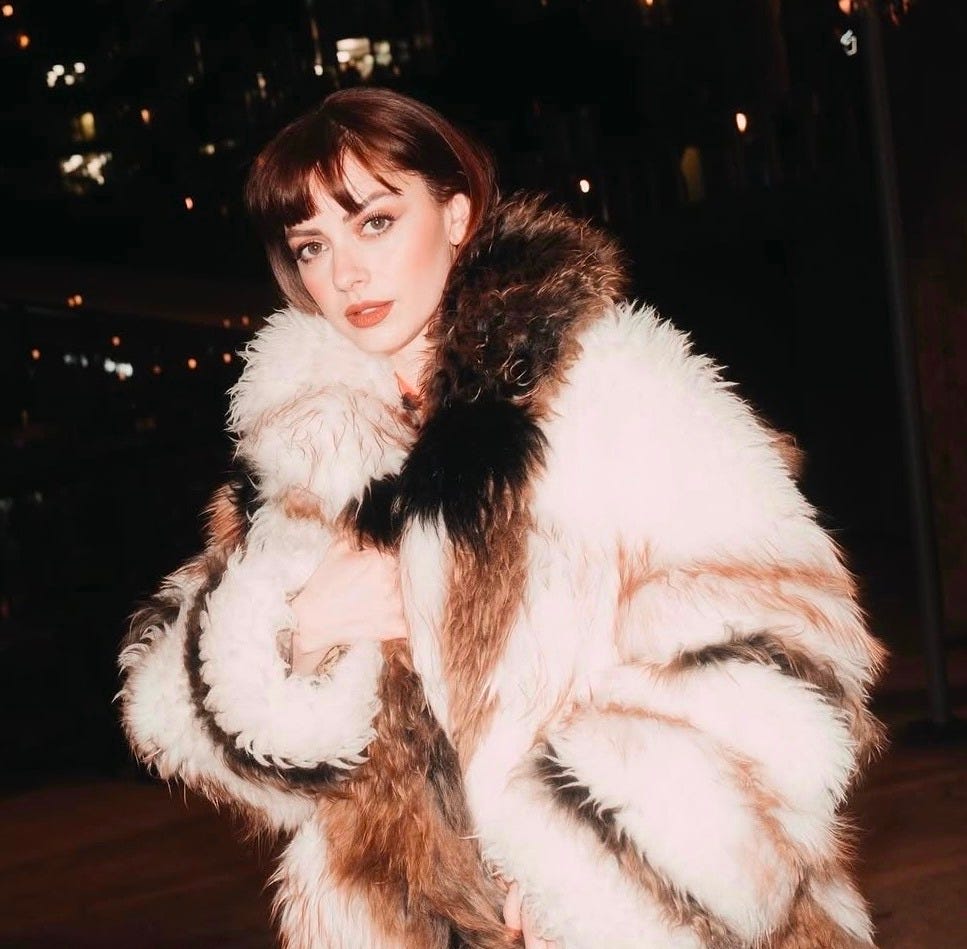


I’ve been out of the Milan fashion show scene long enough to have missed the fact that Fendi doesn’t show much fur on the runway anymore. Most fashion brands don’t, but Fendi was a fur brand, and Karl Lagerfeld, the head designer there for 54 years, famously used the house’s resources and technical skill to make fur fashionable and funky. In 2000 he started designing these cool, colorful patchwork coats. There’s one in the window at the Soho vintage shop What Comes Around Goes Around. Coincidentally, I’ve been seeing a lot of younger women wearing their mother’s (or grandmothers’) old fur coats, and while “vintage” might be cool, these coats look slightly off. They’re too far behind the fashion curve. A friend called the floor-length fox or raccoon coat the “mafia wife” look, but I think it’s more about the fact that the fur market has been dormant for so many years it’s fallen completely out of fashion. A few designers revived fur this season, but usually only mixing shearling with faux fur as at Fendi and Etro in Milan. On the streets, influencers are wearing colorful faux fur chubbies, which look kind of fab. On a recent flight home from L.A. I saw a chic young woman wearing a multi-colored patchwork faux fur jacket. After all the CBK obsession with monotone 90s minimalism, maybe fashion can be fun again. KB
Looking Beyond


One of my first magazine jobs was at Harper’s Bazaar. When the fashion editors there referred to certain items of clothing as “must-haves.” I naively assumed those were the important pieces, the one’s that women would want to wear that season. I was quickly disabused of that notion. “Must-haves” at HB were clothing and accessories by advertisers. The magazine needed to feature them because it was the advertisers who paid everyone’s salary. The challenge was to make those clothes look good.
Lillian Bassman never had a problem with that during her long career at Bazaar—way before my time, to be clear. She started out in 1941 in the magazine’s art department, working with the legendary art director Alexey Brodovitch who was reinventing magazines for a new era. She went on to become an art director, a photographer, and a highly influential teacher. A small exhibition at the Metropolitan Museum (through July 26) makes clear just how innovative she was. By 1950, she was producing photographs that were virtually abstract. She distilled dresses, hats, corsets, girdles, and robes to their essential silhouettes. She used darkroom distortions to create a new kind of fashion photography, merging the soft-focus romanticism of Pictorialist imagery by Edward Steichen and Baron de Meyer with the high-tech edge of Man Ray. Like so many photographers to this day, she often heard the complaint that in her pictures, you couldn’t see the clothes. But fashion is about more than the way a sleeve is set, or a hemline. Fashion is also an attitude, a posture, a way of thinking. Bassman turned “must-haves” into semaphores of modernity. In her photographs, you may not be able to see the clothes, but you can always see the fashion. MB
Romeo Strikes Again
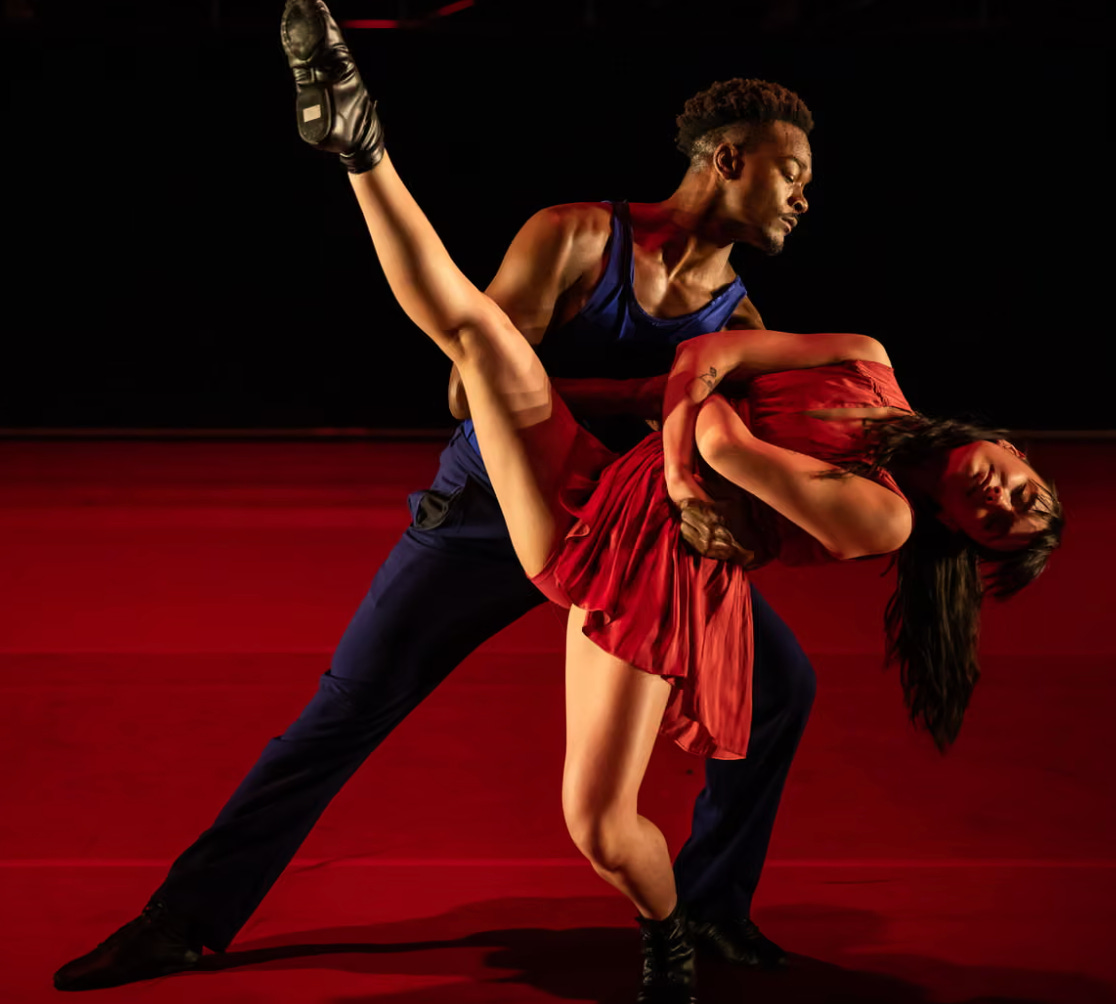
Choreographer and filmmaker Benjamin Millipied brings L.A. Dance Project, his unique blend of live dance and film to New York City’s Park Avenue Armory this month with Romeo & Juliet Suite, a condensed version of Shakespeare’s story set to Prokofiev’s famous ballet score. With alternating casts, Millipied creates mixed gender pairings for the star-crossed lovers and tells the story using the entire Armory space. The use of wide lenses, mirrors and portable lighting tubes accentuates the contrast between the grandness of some of the spaces, and the narrowness of others. The camera operator, Sébastian Marcovici, a former New York City Ballet dancer, moves with the same precision as the performers, lending a surrealist note to the production, especially when the dancers are not on stage. Thru March 21st. KB
A Song from the Heart


The new short documentary A New Day Begun tells the story of the song that has long been considered the Black national anthem. “Lift Every Voice and Sing” has been performed thousands of times since its debut at a segregated elementary school in Florida in 1900— at football games, at concerts, in thousands of Black churches, and on the National Mall during Martin Luther King’s March on Washington in 1963 and at President Obama’s first inauguration. Yet this touchstone of Black culture has largely remained outside the consciousness of most non-Black citizens, something the film’s director Keith Brown hopes to change. Keith is also a painter and showed the film as part of his recent exhibition at Long Gallery Harlem. (Full disclosure: my husband, Robert Pini, is a producer on the film, and secured a grant to underwrite its completion from the Ford Foundation. He and Keith have been friends since they served together in the Peace Corps decades ago.) Here, Keith tells Editors@Large why it was important to him to make this film. MB
Keith, when did you first become aware of the song?
I can’t remember when I wasn’t aware of the song. I grew up singing it in my small church in Freehold, NJ, where my grandmother led the choir and played the organ.
Were you surprised how many people don’t know about the song?
Yes. I never thought about who didn’t know the song. The first time I became aware that there were people who didn’t, was when it was performed at the Super Bowl in 2021 and some people asked, Why does there have to be two anthems? Which is a bit ironic since the Star-Spangled Banner only became the national anthem in 1931, but Lift Every Voice was called the Black national anthem as early as 1912.
Are you surprised at how the film resonates at this moment?
The film couldn’t be more timely. Yes, the song is about resistance, but it is more a song of resilience. That is what the film is about, people who find hope in the face of adversity and tragedy. The song applies to anyone who believes in the American dream—the poem was originally written in honor of Abraham Lincoln, and there is no reference to race in the lyrics. It’s an American hymn.
The film is being screened at film festivals., including recently in D.C. What was that like?
Seeing it on the big screen in front of an audience was mindboggling. People laughed and cried, and then at the end they were singing as the credits rolled. It was very moving. Now we want to put the focus on getting the film shown in schools and community groups. I’ve realized that a whole generation of young black children don’t know the song. My own daughter didn’t know the song. That’s my failure as a father for not passing on that cultural reference.
How to Act Like a Style Icon


Some people have been critical of actress Naomi Watts’s performance as Jackie Kennedy Onassis in Ryan Murphy’s hit, the FX TV series “Love Story,” but I think
